
About SumNinja
I’m Kim Døfler, a maker living in Copenhagen. I got into making things through electronics and robotics, and later taught myself to code through projects and client work.
SumNinja is a mental maths game I have been building in my spare time. Its story begins with a spreadsheet my dad made for me before I started school.
The spreadsheet my dad made
Before I started school, my dad made me a spreadsheet. He put maths challenges in one column, left another for my answers and used a hidden formula to tell me whether I was right. That was the whole thing, but I loved getting an immediate response.
The questions were simple: 1 + 1, 1 + 2, 1 + 3. I spotted that if the first answer was two, the next would be three. I could add one each time instead of working out every sum separately.
| Challenge | My answer | Result |
|---|---|---|
| 1 + 1 | 2+1 ↓ | Correct |
| 1 + 2 | 3+1 ↓ | Correct |
| 1 + 3 | 4+1 ↓ | Correct |
| 1 + 4 | 5+1 ↓ | Correct |
I felt like I cheated the system and that I was so smart. I went into school excited about maths.
Why I started SumNinja
Years later, some calculations that used to feel familiar were taking me longer. The six times table was one example. I wanted something I could use to practise mental arithmetic, so I started building SumNinja.
I was experimenting with ChatGPT at the time, curious about how much code it could produce. It helped me get a maths game onto the screen: type an answer, get a reaction, then confetti and sound effects.
The harder part was making the questions feel right. I reached the limits of what ChatGPT could manage at the time and started writing parts of the code myself, with code suggestions in my editor.
I grouped questions by operation and number range. I treated addition as easier than division, and multiplying small numbers was different from working with larger ones. The game looked at the difficulty and how long an answer took, then adjusted what came next. I kept trying to make the next question challenging without making someone give up.
How SumNinja has changed
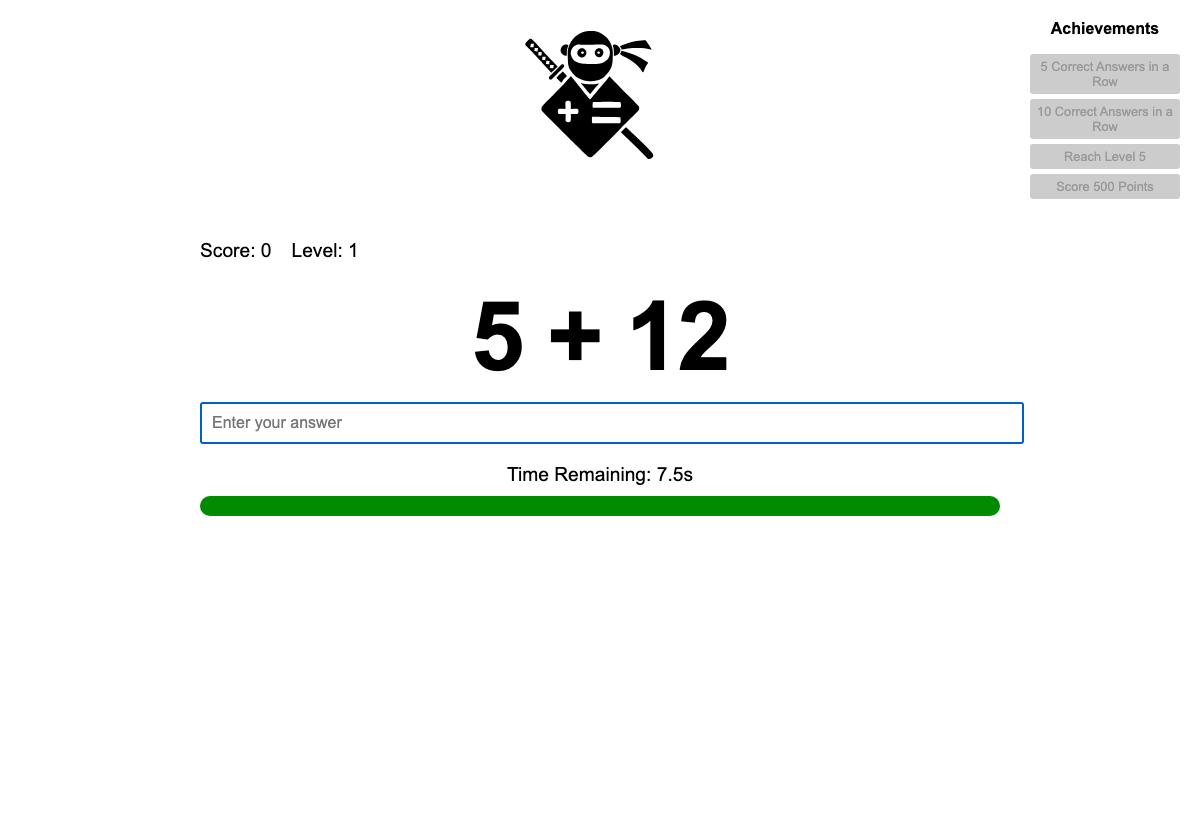
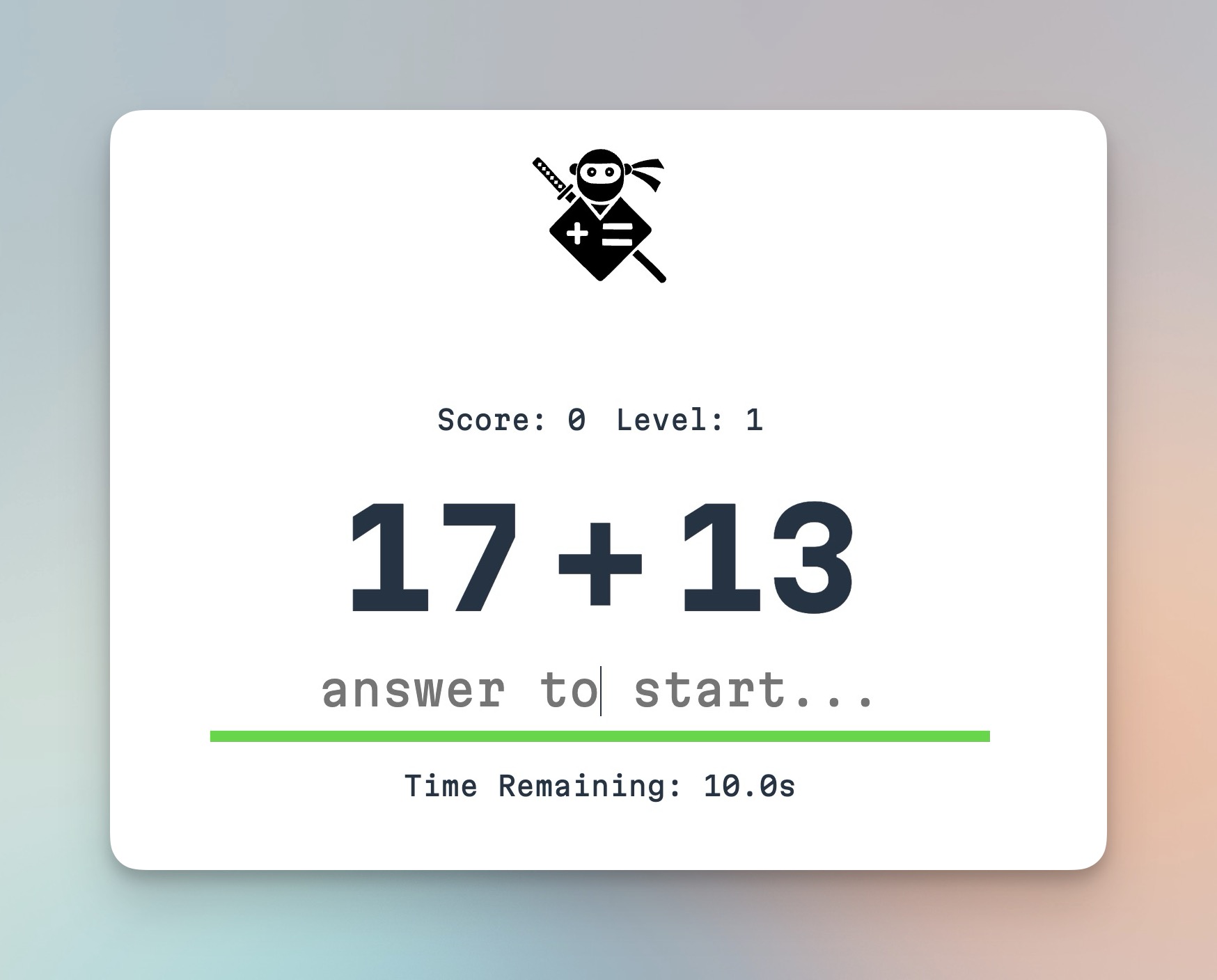
October 2025
More languages
SumNinja started out in English only. I added more languages to reach more people and improve the experience for those already using it.
June 2026
Dedicated pages for lessons and practice
I gave different topics their own URLs, linked related pages and added a sitemap so someone searching for a specific lesson or type of practice could find it.
August 2026
A place to learn the tricks
I added the first mental maths lesson, then more strategies with links to practise them in the game.
One player asked for different numbers of digits on each side of a multiplication question, such as a three-digit number multiplied by a one-digit number. I added separate digit choices to the settings. It looks like a small control, but it lets someone practise the particular kind of question they came for.
There is usually something else I want to try next.